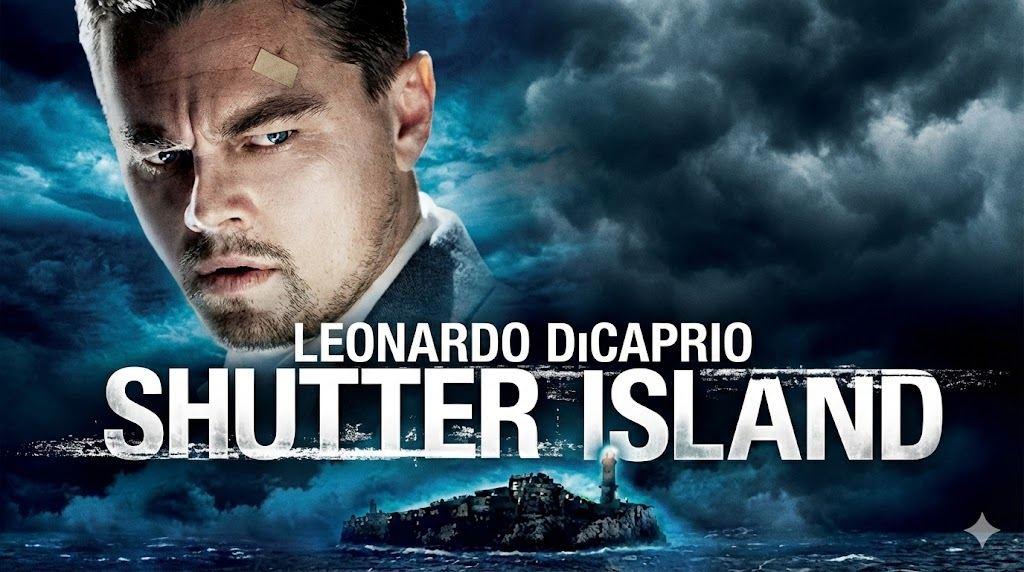
The Truth Behind Shutter Island: Decoding Scorsese’s Psychological Masterpiece
Written by Editorial Team
Introduction: The Haunting Fog of Ashecliffe
When Martin Scorsese’s Shutter Island made its debut in 2010, it didn’t just offer a chilling atmosphere; it delivered a psychological gut-punch that left audiences debating in theater lobbies for hours. Based on the 2003 novel by Dennis Lehane, the film is a masterclass in tension, unreliable narration, and the devastating weight of trauma. Over a decade later, it remains one of the most searched “ending explained” movies in cinematic history.
The film follows U.S. Marshal Edward “Teddy” Daniels as he arrives at Ashecliffe Hospital, a fortress-like asylum for the criminally insane located on a remote, craggy island. His mission? To find a missing patient, Rachel Solando. However, as the storm rolls in and the mystery deepens, the lines between Teddy’s reality and the hospital’s secrets begin to blur.
Why does this film continue to trend? Because it challenges the viewer’s perception. It isn’t just a “whodunit”; it’s a “who-am-I.” As we peel back the layers of Teddy’s psyche, we find a narrative so intricately woven with foreshadowing that a second viewing becomes a completely different experience.
Warning: The following article contains major spoilers for Shutter Island.
Movie Biodata Table
| Category | Details |
|---|---|
| Movie Name | Shutter Island |
| Release Date | February 19, 2010 |
| Language | English |
| Genre | Psychological Thriller / Neo-noir / Mystery |
| Director | Martin Scorsese |
| Writer | Laeta Kalogridis (Screenplay), Dennis Lehane (Novel) |
| Producers | Martin Scorsese, Bradley J. Fischer, Mike Medavoy, Arnold W. Messer |
| Production Company | Phoenix Pictures, Sikelia Productions, Appian Way Productions |
| Budget (Reported) | $80 Million |
| Box Office (Worldwide) | $294.8 Million |
| Runtime | 138 Minutes |
| OTT Platform | Paramount+, Netflix, Amazon Prime (Rental/Purchase) |
| IMDb Rating | 8.2/10 |
| Rotten Tomatoes Score | 69% (Critics) / 77% (Audience) |
| Certification | R (Language, Violence, Disturbing Images) |
Plot Summary: A Descent Into Madness
The year is 1954. U.S. Marshal Teddy Daniels (Leonardo DiCaprio) and his new partner, Chuck Aule (Mark Ruffalo), arrive at Shutter Island during a fierce storm. They are there to investigate the disappearance of Rachel Solando, a mother who vanished from a locked room after drowning her three children.
From the moment they step off the ferry, something feels off. The guards are overly tense; the lead psychiatrist, Dr. John Cawley (Ben Kingsley), is suspiciously polite but uncooperative; and Teddy is plagued by migraines and vivid, haunting dreams of his late wife, Dolores (Michelle Williams), who died in a fire set by a man named Andrew Laeddis.
As Teddy digs deeper, he begins to believe that Ashecliffe is performing illegal mind-control experiments, funded by the government. He suspects that Andrew Laeddis—the man responsible for his wife’s death—is being held in the mysterious Ward C. Teddy’s investigation leads him to a sea cave where he meets a “real” Rachel Solando, who claims she was a doctor at the facility before being forcibly committed to stop her from whistleblowing.
Driven by a mix of grief and a desire for justice, Teddy makes a final break for the lighthouse, believing it to be the center of the lobotomy operations. What he finds there, however, isn’t a laboratory of horrors, but a simple office where Dr. Cawley and Chuck are waiting for him.
Movie Ending Explained: The Truth About Andrew Laeddis
The climax of Shutter Island is one of the most celebrated twists in modern cinema. As Teddy enters the lighthouse, Dr. Cawley reveals the devastating truth: Teddy Daniels does not exist.
What Actually Happened?
“Teddy Daniels” is an anagram for Andrew Laeddis. Andrew was a U.S. Marshal who suffered a mental breakdown after his manic-depressive wife, Dolores, drowned their three children. In a fit of grief and rage, Andrew shot Dolores. Unable to live with the reality of what he had done—and his failure to get his wife help sooner—Andrew created a complex fantasy world. In this world, he is a hero investigating a conspiracy, and Andrew Laeddis is a separate, villainous entity.
The entire movie was a radical form of “roleplay” therapy designed by Dr. Cawley. Chuck Aule was actually Dr. Lester Sheehan, Andrew’s primary psychiatrist. The staff allowed Andrew to play out his fantasy one last time in a desperate attempt to break his cycle of delusion. If he didn’t wake up now, the hospital board would be forced to perform a lobotomy to manage his “violent” outbursts.
The Final Line: Choice vs. Fate
In the film’s closing moments, Andrew appears to have regained his sanity. He acknowledges his past and the death of his children. However, the next morning, sitting on the steps with Dr. Sheehan, Andrew turns to him and says, “We gotta get off this island, Chuck. Something’s going on here.”
Sheehan sighs, signaling to the doctors that the treatment failed. As the orderlies approach with surgical tools, Andrew looks at Sheehan and asks the haunting final question:
“Which would be worse: To live as a monster, or to die as a good man?”
This line confirms that Andrew did regain his sanity. He chose to feign a relapse so that he would be lobotomized. Andrew could no longer live with the crushing guilt of his wife’s and children’s deaths. He chose to “die as a good man” (the lobotomized version of Teddy) rather than “live as a monster” (the conscious Andrew Laeddis).
Hidden Symbolism: Fire vs. Water
Scorsese uses elemental symbolism to track Andrew’s mental state.
- Water: Represents the harsh, cold reality. Andrew’s children were drowned in water; it rains whenever the truth gets closer; he is constantly seasick. Water is the truth he cannot face.
- Fire: Represents Andrew’s delusion. Whenever he sees fire (the matches in the cave, the fire in his dreams), he is deep in his fantasy. His wife “died in a fire” in his mind, though she actually died by a bullet near a lake. Note how the “fake” Rachel Solando in the cave is surrounded by fire—she is a total figment of his imagination.
Character Arcs Explained
Andrew’s journey is a tragic circle. He begins as a man seeking a killer, only to realize he is the killer he seeks. Dr. Cawley, often framed as a villain, is actually the film’s most empathetic figure—a man willing to risk his career on a “crazy” experiment to save a patient from the knife.
Alternate Interpretations
- The Conspiracy Theory: A popular fan theory suggests that Teddy was a real Marshal and the doctors successfully brainwashed him into believing he was Andrew Laeddis. While the film leaves room for doubt, the visual cues (like the disappearing water glass in the interrogation scene) suggest the “unreliable narrator” perspective is the intended one.
- The Lighthouse as a Mirror: Some interpret the lighthouse not as a place of surgery, but as a mirror. It is empty because the “monsters” are not in the basement; they are in Andrew’s head.
Technical & Cinematic Analysis
Shutter Island is a masterclass in visual storytelling. Scorsese and cinematographer Robert Richardson used various film stocks to differentiate between the “present” and Andrew’s “dreams.” The dream sequences are hyper-saturated and surreal, contrasting with the bleak, sickly greens and grays of the island.
The Editing (Thelma Schoonmaker):
If you watch closely, there are “errors” in the film. A patient drinks from a glass that isn’t there; Chuck struggles to remove his holster (because he’s a doctor, not a cop). These aren’t mistakes—Schoonmaker and Scorsese planted these to show the cracks in Andrew’s manufactured reality.
The Score:
Rather than an original score, Scorsese used a curated selection of modern classical music. The opening theme, “Symphony No. 3” by Krzysztof Penderecki, creates an immediate sense of impending doom. The music doesn’t just accompany the film; it invades the viewer’s personal space, mimicking the pressure of a migraine.
Budget & Box Office Insight
Shutter Island was a significant financial success for Paramount and Sikelia Productions.
- Production Budget: $80 million.
- Marketing: Estimated at $40–50 million.
- Opening Weekend: $41.1 million (Scorsese’s best opening until Killers of the Flower Moon).
- Total Worldwide Gross: $294,805,697.
The film was originally slated for an October 2009 release to position it for the Oscars, but Paramount pushed it to February 2010. While February is often considered a “dumping ground” for bad films, Shutter Island defied the odds, proving that high-concept psychological thrillers have massive global appeal.

Reviews & Audience Reaction
- IMDb: 8.2/10 (Over 1.5 million votes).
- Rotten Tomatoes: 69% Critics / 77% Audience.
- Google Users: 91% liked this movie.
Critics Consensus:
While some critics at the time felt the twist was predictable if you had read the book or were familiar with the genre, most praised Scorsese’s direction. Roger Ebert gave it 3.5/4 stars, noting that the film is “about the atmosphere, the sense of dread, and the way it plays with the audience’s mind.”
Social Media Reception:
In the age of TikTok and YouTube, Shutter Island has found a new life. It is frequently cited in “Top 10 Mind-Blowing Movie Twists” lists and remains a staple for film students studying the “Unreliable Narrator” trope.
Where to Watch
As of 2024, Shutter Island is widely available for legal viewing:
- Streaming: Currently available on Paramount+ and Netflix (availability varies by region).
- Rental/Purchase: Available in 4K Ultra HD on Apple TV, Amazon Prime Video, and Google Play Movies.
Awards & Cultural Impact
Despite its critical and commercial success, Shutter Island was largely overlooked by the Academy Awards, likely due to its February release date. However, it won several National Board of Review awards and was nominated for multiple Saturn Awards.
Its cultural impact is seen in how we discuss mental health in cinema. It moved away from the “slasher in an asylum” trope and toward a sophisticated look at PTSD and the defense mechanisms of the human brain.
Sources & References
- IMDb: Shutter Island (2010)
- Box Office Mojo: Shutter Island Financials
- Rotten Tomatoes: Shutter Island Reviews
- Official Production Notes: Paramount Pictures Archives.
- Trade Analyst Report: Variety Insight on 2010 Box Office Trends.
FAQ Section
1. Is Teddy Daniels a real person?
No. “Teddy Daniels” is an alias created by Andrew Laeddis. It is an anagram of his real name.
2. Who is the woman in the cave?
The woman Teddy meets in the cave is a hallucination. She represents his subconscious mind trying to validate his conspiracy theories so he doesn’t have to face his own guilt.
3. Why did Andrew choose to be lobotomized?
Andrew realized his crimes and his failure to protect his children. He decided that living with that memory was worse than having his consciousness erased by a lobotomy.
4. What does the ending line mean?
“To live as a monster” refers to living as Andrew Laeddis, the man who killed his wife. “To die as a good man” refers to being lobotomized while still believing he is Teddy Daniels, the hero Marshal.
5. Was Chuck Aule in on the experiment?
Yes. “Chuck” was actually Dr. Lester Sheehan, Andrew’s psychiatrist. He spent two years working with Andrew before the “roleplay” experiment began.