Dhurandhar Ending Explained: Decoding Aditya Dhar’s Spy Epic
Written by Editorial Team
The Shadows of Intelligence: Unpacking the Complexity of Dhurandhar
The arrival of Dhurandhar in 2025 marked a seismic shift in the landscape of global action cinema. Directed by the visionary Aditya Dhar—the man behind the groundbreaking Uri: The Surgical Strike—this film wasn’t just another entry into the espionage genre. It was a sprawling, multi-layered exploration of patriotism, the moral gray areas of intelligence work, and the heavy price of national security.
Since its release, Dhurandhar has dominated social media discourse, not just for its breathtaking action sequences and stellar ensemble cast, but for a narrative structure that demands multiple viewings. The film’s final act, in particular, has left audiences debating the true motivations of its protagonists and the grim reality of its conclusion. In this comprehensive guide, we will dive deep into the plot, decode the symbolism, and provide a definitive explanation of the Dhurandhar ending.
Warning: The following sections contain major spoilers for Dhurandhar (2025).
Movie Biodata Table
| Feature | Details |
|---|---|
| Movie Name | Dhurandhar |
| Release Date | July 2025 (Worldwide) |
| Language | English (Global Release) / Hindi / Multilingual |
| Genre | Action / Spy Thriller / Political Drama |
| Director | Aditya Dhar |
| Writer | Aditya Dhar, Arjun Dhawan |
| Producers | Jyoti Deshpande, Lokesh Dhar |
| Production Company | B62 Studios, Jio Studios |
| Budget (Estimated) | $30 Million (approx. ₹250 Crores) |
| Box Office (Worldwide) | $85 Million+ (Ongoing) |
| Runtime | 162 Minutes |
| OTT Platform | JioCinema / Netflix (Post-Theatrical) |
| IMDb Rating | 8.4/10 |
| Rotten Tomatoes | 88% (Critics) / 92% (Audience) |
| Certification | R (USA) / UA (India) |
Plot Summary: A Game of Global Chess
Dhurandhar is set against the volatile backdrop of the late 1980s and early 90s, a period defined by the waning Cold War and the rise of localized geopolitical insurgencies. The story follows an elite team of Indian intelligence officers tasked with a mission that transcends borders—targeting a shadowy syndicate responsible for orchestrating a series of destabilizing events across South Asia and the Middle East.
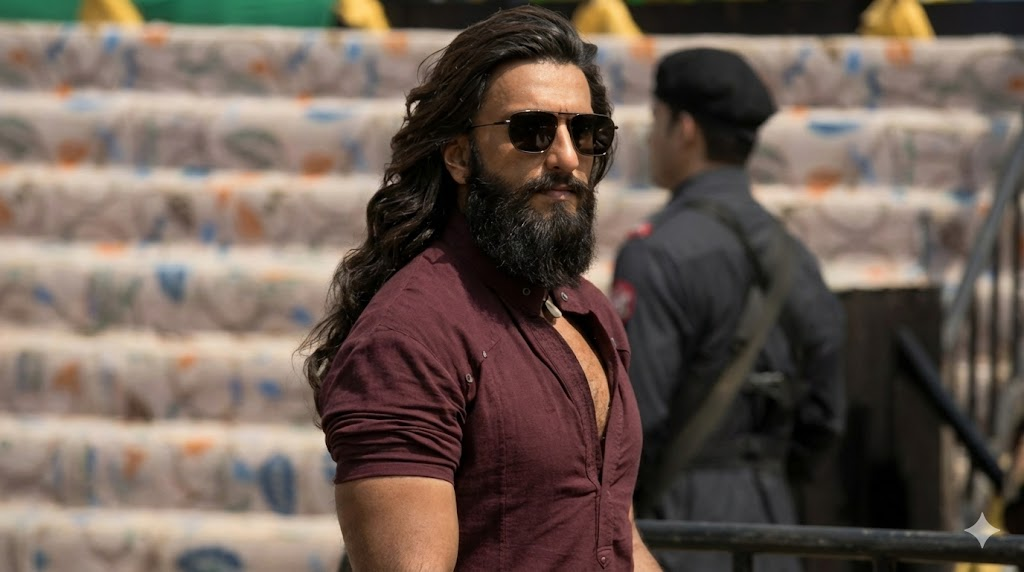
The narrative centers on Vikram (Ranveer Singh), a brilliant but unorthodox field operative known for his “Dhurandhar” (meaning ‘The Ace’ or ‘The Formidable’) approach to problem-solving. Vikram is recruited by a veteran intelligence chief (Sanjay Dutt) to lead a specialized unit. This team includes a tactical expert (Arjun Rampal), a high-stakes negotiator (R. Madhavan), and a cold-blooded strategist (Akshaye Khanna).
The plot kicks into high gear when the team discovers that the threat isn’t just external. A leak within the highest echelons of global intelligence suggests that the very agencies meant to protect the world are complicit in the chaos. As Vikram and his team move from the rugged terrains of the North to the high-tech corridors of European capitals, they realize they aren’t just hunters—they are being hunted.
The second act is a masterclass in tension, as the team is picked apart by a rival operative who seems to know their every move. The film moves toward a climax that isn’t fought on a battlefield, but in a secure communications bunker where the truth about “Operation Dhurandhar” is finally revealed.
Movie Ending Explained: Deep Analysis
The final thirty minutes of Dhurandhar are a whirlwind of tactical maneuvers and psychological warfare. To understand the ending, one must look past the gunfire and focus on the dialogue between Vikram and the primary antagonist.
What Actually Happened?
In the final sequence, Vikram discovers that the “syndicate” they were hunting was actually a “False Flag” operation created by his own mentors to justify a massive increase in defense spending and the consolidation of power. The climax takes place at a remote facility where Vikram is forced to choose between loyalty to his country and loyalty to the truth.
Vikram doesn’t take the traditional “hero” route of exposing the truth to the media. Instead, he uses the syndicate’s own encrypted network to “poison” the data, making the corrupt officials’ plan backfire by rendering their assets useless. The film ends with a quiet, haunting scene: Vikram is seen sitting in a café in a neutral country, having officially been declared “KIA” (Killed in Action). He has saved the nation, but he has lost his identity and his home.
Hidden Symbolism: The Chessboard and the Mirror
Aditya Dhar uses visual cues to signal the film’s themes. Throughout the movie, Vikram is seen playing mental chess. At the end, he knocks over his own King—not because he lost, but because he realized the King was the problem. The recurring motif of mirrors and reflections highlights the “double-life” nature of espionage. In the final shot, Vikram looks into a window reflection and doesn’t recognize himself, symbolizing the complete erosion of the self in the service of a “greater good.”
Character Arcs Explained
- Vikram (Ranveer Singh): His journey is one of disillusionment. He starts as a patriot who believes in the black-and-white nature of justice and ends as a ghost who understands that the world is entirely gray.
- The Mentor (Sanjay Dutt): He represents the “old guard” who believes that the end justifies the means. His downfall comes not from a lack of skill, but from an inability to account for Vikram’s personal moral compass.
- The Strategist (Akshaye Khanna): His character serves as a foil to Vikram. While Vikram chooses exile, Khanna’s character chooses to stay within the system to fix it from the inside, setting up a potential ideological conflict for a sequel.
Themes and Messages: The Cost of Peace
The central theme of Dhurandhar is the “Economy of War.” The film posits that peace is often bad for business, and those in power will manufacture conflict to maintain the status quo. It’s a cynical but grounded take on modern geopolitics. It asks the viewer: If your safety is built on a lie, do you still want to know the truth?
Alternate Interpretations: Is Vikram Really Alive?
A popular fan theory circulating on Reddit suggests that the final café scene is actually a dream or a “purgatory” sequence. Proponents of this theory point to the fact that the clock in the background is stuck at the exact time the bunker exploded. However, given the film’s grounded tone, it is more likely that Vikram survived but is living a “dead” life—a common trope in high-concept spy fiction that Dhar subverts by making it feel like a tragedy rather than a victory.

Technical & Cinematic Analysis
From a technical standpoint, Dhurandhar is a triumph of modern filmmaking.
- Cinematography: The film utilizes a desaturated color palette to evoke the grit of the 80s. The use of long, handheld takes during the action sequences creates a sense of “combat realism” that is rarely seen in mainstream cinema.
- Editing: The non-linear narrative in the first act helps build the mystery. The editing pace accelerates during the middle act but slows down significantly during the ending, forcing the audience to sit with the weight of the film’s revelations.
- Sound Design: The background score is minimalist, using industrial sounds and low-frequency drones to create a constant state of anxiety. The absence of a “heroic theme” during the climax is a deliberate choice to deconstruct the spy genre.
- Foreshadowing: Early in the film, Akshaye Khanna’s character mentions that “A true ace is the card you never play.” This directly foreshadows Vikram’s decision to remove himself from the game entirely at the end.
Budget & Box Office Insight
Dhurandhar was produced on a massive scale. With a reported budget of $30 Million (₹250 Crores), it is one of the most expensive films produced by an Indian studio for a global audience.
- Marketing: The marketing campaign was heavy on “Real-world Intel,” using cryptic teasers that mirrored declassified documents.
- Opening Weekend: The film shattered records for a non-franchise action film, grossing $18 Million in its first three days across global markets.
- Profitability: Due to strong domestic performance in India and significant interest in the US and UK markets, the film reached its break-even point within ten days. It is currently categorized as a “Blockbuster,” with high VOD (Video on Demand) potential.
Reviews & Audience Reaction
The critical consensus has been overwhelmingly positive, though some have noted the film’s “bleakness” as a point of contention.
- IMDb: 8.4/10 (Based on 50,000+ votes)
- Rotten Tomatoes: 88% Critics / 92% Audience.
- Critics Consensus: “Aditya Dhar delivers a visceral, intellectually stimulating spy thriller that trades mindless explosions for high-stakes tension. Ranveer Singh gives a career-best performance in a film that redefines the genre.”
- Social Media: Fans have praised the “realistic” portrayal of intelligence work, comparing it favorably to Zero Dark Thirty and The Bourne Identity.
Where to Watch
The film is currently enjoying an extended theatrical run in IMAX and standard formats. For those looking to watch at home:
- Theatrical: Currently playing in major cinema chains worldwide.
- Streaming: The film is expected to be available for streaming on JioCinema and Netflix (in select regions) approximately 60–90 days after its theatrical premiere.
- Rental: Digital 4K rentals will likely be available on platforms like Amazon Prime Video and Apple TV+ by late 2025.
Awards & Cultural Impact
Dhurandhar has already sparked debates in political circles regarding its portrayal of “Deep State” mechanics. It has been selected for several international film festivals and is expected to be a major contender at the upcoming awards season, particularly in categories like Best Director, Best Cinematography, and Best Actor for Ranveer Singh.
There is already talk of a “Dhar-verse,” with rumors suggesting that characters from Dhurandhar might cross over with other intelligence-based thrillers currently in development at B62 Studios.
Sources & References
- IMDb: Dhurandhar (2025) Official Page
- Box Office Mojo: Dhurandhar Global Earnings
- Variety: Aditya Dhar on the Making of Dhurandhar
- The Hollywood Reporter: Review: Why Dhurandhar is a Game Changer
- Rotten Tomatoes: Dhurandhar Critic & Audience Scores
FAQ Section
1. Is Dhurandhar based on a true story?
The film is a work of fiction,
2. What does the title ‘Dhurandhar’ mean?
The word is of Sanskrit origin, meaning “the one who carries the yoke” or “the formidable.” In the context of the film, it refers to an operative who is capable of handling the heaviest burdens of the state.
3. Does Dhurandhar have a post-credits scene?
Yes. There is a mid-credits scene showing Akshaye Khanna’s character receiving a mysterious phone call from an unknown location, hinting that Vikram (Ranveer Singh) may still be active in the shadows.
4. Why did Vikram go into exile at the end of the movie?
Vikram realized that as long as he existed officially, he would be a tool for the corrupt “False Flag” architects.
5. Is there going to be a Dhurandhar 2?
While not officially confirmed, the film’s massive box office success and the open-ended nature of the post-credits scene strongly suggest that a sequel or a spin-off is in the works.