Ikkis: The Real Story of Arun Khetarpal & The Battle of Basantar
Let’s be honest for a second. When most of us were 21, our biggest battles involved surviving a hangover, finishing a term paper at 3 AM, or trying to convince a bouncer that our fake ID was actually legit. We were young, dumb, and mostly worried about what to wear on Friday night.
Then, there’s Second Lieutenant Arun Khetarpal.
At 21—an age when I was still figuring out how to do my own laundry—this young officer was sitting inside a Centurion tank, staring down a squadron of superior Pakistani Patton tanks, and deciding that “retreat” was a word that didn’t apply to him.
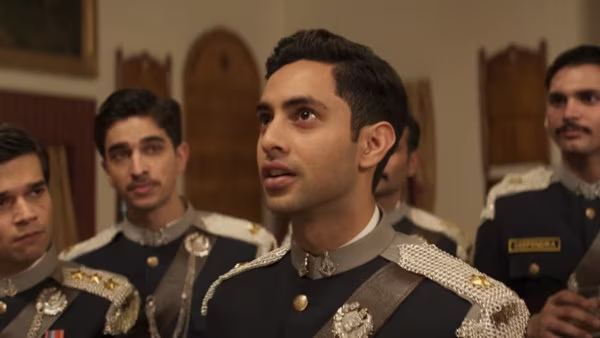
With the buzz around Sriram Raghavan’s film Ikkis, starring Agastya Nanda and the legendary Dharmendra, everyone is suddenly Googling the Ikkis real story Arun Khetarpal. And let me tell you, as much as I love a good movie with dramatic lighting and background scores, the reality of what happened on the banks of the Basantar River in December 1971 is wilder, grittier, and more heroic than any scriptwriter could dream up.
So, buckle up. We’re going back to 1971 to look at the youngest recipient of the Param Vir Chakra, a guy who essentially looked at the orders to fall back and said, “No thanks, I’m having too much fun.”
The Vibe of 1971: Heavy Metal in the Shakargarh Sector
To understand the Ikkis real story Arun Khetarpal, you have to understand the mess that was the Battle of Basantar.
It was December 1971. The Indo-Pak war was raging. The Indian Army was pushing into the Shakargarh bulge—a strategic piece of land that Pakistan relied on to threaten Jammu. The terrain? A nightmare. It was crisscrossed by rivers and soft ground, which is basically kryptonite for heavy tanks.
The 17 Poona Horse (Arun’s regiment) was tasked with establishing a bridgehead across the Basantar River. Now, in military speak, “establishing a bridgehead” is a polite way of saying, “Go sit on the enemy’s side of the river and try not to die while they throw everything they have at you.”
The Pakistan Army knew that if India held Basantar, it was game over for that sector. So, they called in their heavy hitters: the 13th Lancers, equipped with American-made Patton tanks.
The Tank Match-Up: David vs. Goliath?
Here’s where my inner military nerd comes out. The Pakistanis were rolling in Pattons. These things were the Ferraris of the battlefield at the time—modern sights, better night vision, faster.
The Indians? They were in Centurions. Don’t get me wrong, the Centurion was a beast—tough as nails and reliable—but it was older. It was like bringing a 1960s muscle car to a Formula 1 race. You could win, but you had to be a much, much better driver.
And Arun Khetarpal? He was one heck of a driver.

The Man Behind the Uniform
Before the shells start flying, let’s talk about the boy. Arun Khetarpal came from a lineage that practically bled olive green. His father was a Brigadier; his great-grandfather fought against the Sikhs in 1848 (on the British side, but hey, history is complicated).
Arun was commissioned into the 17 Poona Horse in June 1971. By December, he was at war. He hadn’t even finished his requisite “Young Officers” course. He was fresh. Green. A rookie.
In the movie Ikkis, you’ll likely see the emotional side of leaving home, the training montages, and the youthful romance. But in reality, the timeline was brutally short. He went from the academy to the front lines faster than Amazon delivers Prime packages.
He was known to be charming, a bit of a jazz enthusiast, and incredibly disciplined. But nobody, and I mean nobody, knew he had a “one-man army” mode waiting to be unlocked.
December 16, 1971: The Day of Reckoning
The date is crucial. December 16th. Why? Because the very next day, a ceasefire would be declared. The war was practically over. Dhaka fell that same day.
If Arun had just played it safe, he would have gone home a hero anyway. But safe wasn’t in the job description.
The Morning Assault
At the crack of dawn, the Pakistani 13th Lancers launched a massive counter-attack. They were desperate to dislodge the Indian troops from the bridgehead. They came in waves, using smoke screens and the dust of the battlefield to mask their movement.
The Indian B Squadron, guarding the flank, was outnumbered. They called for help.
Enter A Squadron, 17 Poona Horse. This is where Arun Khetarpal comes in. He was commanding a troop of tanks (usually three tanks) and rushed to reinforce the crumbling defenses.
The Duel
What happened next is the stuff of legend. Arun’s troop charged into the oncoming Pakistani armor. It wasn’t a long-range tactical snipe-fest; this was a brawl. Tanks were firing at each other from ranges as close as a few hundred meters.
Arun, in his tank named Famagusta, started picking off Pattons like he was playing a video game on easy mode. He destroyed one. Then another. Then another.
The Pakistanis were stunned. They couldn’t break through this one stubborn section of the line. But the cost was high. The other two tanks in Arun’s troop were hit. One commander was killed; the other was wounded.
Arun was now alone. Just him, his crew, and Famagusta.
“My Gun is Still Working”
This is the moment that defines the Ikkis real story Arun Khetarpal.
His tank was hit. It caught fire. It was taking a beating. His superior officer, realizing the situation was hopeless and that Arun was essentially a sitting duck, ordered him to abandon the tank and fall back.
Now, standard protocol—and basic survival instinct—says you listen to your boss when he tells you to run away from the burning metal box that people are shooting at.
Arun got on the radio. His voice didn’t crack. He didn’t panic. He delivered a line that has been etched into the halls of the National Defence Academy ever since:
“No, Sir, I will not abandon my tank. My gun is still working and I will get these bastards.”
I get chills just typing that.
He switched off his radio set to avoid further orders to retreat (the 1971 equivalent of “New phone, who dis?”). Then, he went back to work.
The Final Stand
With his tank aflame, Arun Khetarpal continued to engage the enemy. The Pakistani tanks were closing in, realizing that this one Indian tank was holding up their entire advance.
He maneuvered Famagusta with a desperation and skill that defied his age. He destroyed a total of 10 enemy tanks during the engagement. Ten. Most tank aces don’t get that many in a whole war, let alone a single morning.
The last tank he engaged was barely 100 meters away. It was a quick-draw duel. Both tanks fired almost simultaneously.
Arun’s shell hit the Pakistani tank, destroying it. But the Pakistani shell hit Famagusta.
The shell pierced the armor, mortally wounding Arun. He died instantly, denying the enemy the breakthrough they so desperately needed. The burning wreck of his tank became a roadblock that the 13th Lancers couldn’t pass.
The attack was repulsed. The bridgehead was saved. The next day, the war ended.
The Aftermath: A Father’s Grief and Pride
The story doesn’t end on the battlefield. This is where the Ikkis real story Arun Khetarpal hits you right in the feels.
Arun was awarded the Param Vir Chakra (PVC) posthumously. He is the youngest recipient of India’s highest military honor.
Years later, Arun’s father, Brigadier M.L. Khetarpal, visited Pakistan. He was hosted by a Pakistani Brigadier, Khwaja Mohammad Naser. During their conversation, the mood turned somber.
Brigadier Naser asked about the 1971 war and specifically about the Battle of Basantar. He admitted that his unit had been decimated by a single Indian tank that fought like a demon. He said, “There was this one young officer… stubborn fellow. We hit him, but he wouldn’t stop.”
Brigadier Naser then revealed, “I was the one who fired the shot that killed him. It was a soldier’s duty. But I have always wondered who that boy was. He fought like a tiger.”
Brigadier M.L. Khetarpal, with the quiet dignity that only a military father can possess, looked him in the eye and said, “That boy was my son.”
The room went silent. The Pakistani Brigadier was reportedly shaken, saluting the father of the man who had bested his squadron. It’s a moment of human connection that transcends borders and politics. It reminds us that on the other side of the gun sights, there are just men doing their jobs, bearing the weight of their choices forever.
Why Ikkis Matters Today
So, why are we obsessed with this story now? Why is Sriram Raghavan making a movie about it?
It’s not just because Agastya Nanda looks good in a uniform (though I’m sure that helps the box office). It’s because the story of Arun Khetarpal challenges our modern definition of “commitment.”
We live in an era of quiet quitting and side hustles. We flake on plans because it’s raining. We give up on projects when the Wi-Fi gets slow.
Arun Khetarpal had every excuse to bail.
- He was outnumbered.
- His tank was on fire.
- His boss told him to leave.
- The war was practically over.
He stayed because he understood something about duty that is hard for us to grasp today. He stayed for the men beside him and the country behind him.
Cinematic Liberty vs. Hard Facts
When you watch Ikkis, enjoy the drama. Enjoy the storytelling. But remember that the real-life action was faster, louder, and much more terrifying.
Movies often romanticize the “last words.” In reality, radio chatter is static-filled and chaotic. Movies show slow-motion deaths; reality is sudden and jarring.
However, if the movie gets the spirit of that radio transmission right—that defiance, that wit, that absolute refusal to yield—then it’s done its job.
Lessons from the “Ikkis” (21) Year Old
What can we take away from the Ikkis real story Arun Khetarpal besides a newfound respect for the Armoured Corps?
- Age is Just a Number: Leadership isn’t about how many gray hairs you have; it’s about how you react when the heat turns up. Arun was a kid by chronological standards, but a giant by moral ones.
- Tools Don’t Make the Man: He was in an older tank fighting newer ones. He won because of skill and grit, not specs. (Remember that next time you think you can’t succeed without the latest MacBook).
- Stand Your Ground: Sometimes, the world (or your commanding officer) tells you to quit. If you know you’re right, and you know you can win, you switch off the radio and keep firing.
Conclusion: The Empty Chair
At the National Defence Academy (NDA) in Pune, inside the dining hall of the Squadron Arun belonged to, there is a table. At that table, one chair is always left empty. It is set for Second Lieutenant Arun Khetarpal.
No cadet sits there. It’s a reminder that while they are eating their dinner, someone else paid the bill for their freedom a long time ago.
The movie Ikkis will bring the visuals, the music, and the stars. It will make us cry and cheer. But the true legacy of Arun Khetarpal isn’t on a cinema screen. It’s in the dust of the Basantar riverbank, where a 21-year-old boy turned into an immortal legend by simply refusing to give up.
So, the next time you feel overwhelmed by life’s little battles, think of Arun. If he could handle a squadron of Patton tanks while his own ride was on fire, you can probably handle that Monday morning meeting.
Go watch the movie. But remember the man.
Enjoyed this deep dive into military history? Share this article with a friend who thinks “tanking” is just a term used in video games. Let’s keep the legacy of our heroes alive.