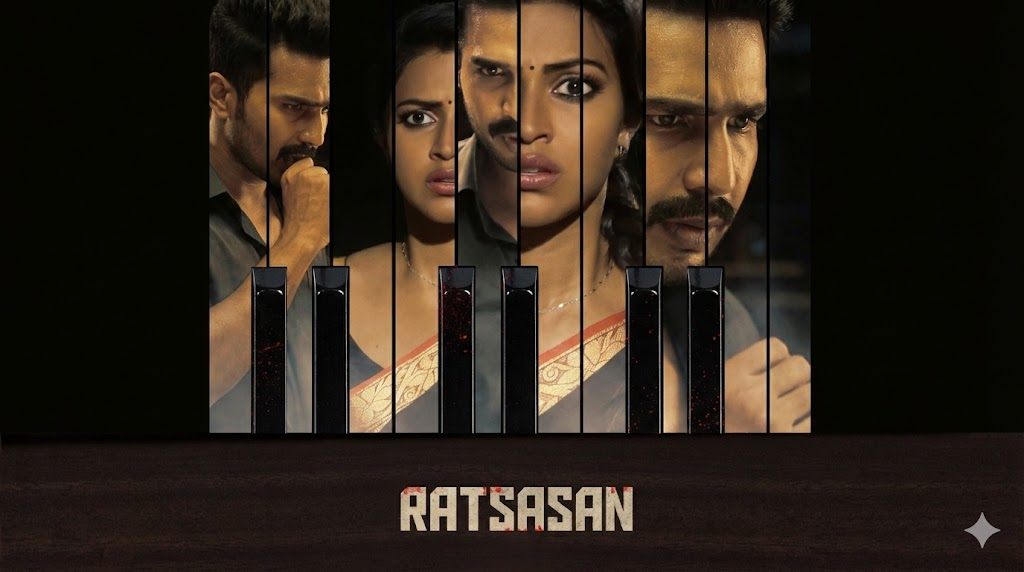
Raatchasan Ending Explained: Decoding Christopher’s Motives & Plot Twists
Written by Editorial Team
Introduction: The Cult of Raatchasan
In the vast landscape of Indian cinema, few films manage to bridge the gap between commercial success and critical acclaim as seamlessly as the 2018 Tamil-language psychological thriller, Raatchasan. Directed by Ram Kumar, this visceral journey into the heart of darkness did more than just entertain; it set a new benchmark for the “police procedural” sub-genre in India. Years after its release, the film continues to trend on global streaming platforms, sparking intense debates regarding its complex antagonist, its harrowing atmosphere, and its meticulously crafted climax.
What makes Raatchasan (which translates to “Demon”) stand out is not just its jump scares or its grisly crime scenes, but the intellectual rigor with which it approaches the cat-and-mouse game between a failed filmmaker turned cop and a phantom-like serial killer. Viewers often find themselves returning to the final thirty minutes of the film, seeking to decode the tragic, yet terrifying, origins of the killer and the thematic weight of the protagonist’s victory.
In this comprehensive analysis, we will break down the narrative structure of Raatchasan, explain the nuances of its ending, and explore why it remains a terrifyingly relevant piece of cinema.
Note: Detailed spoilers ahead. Proceed only if you have watched the film or wish to have the plot fully revealed.
Movie Biodata Table
| Feature | Details |
|---|---|
| Movie Name | Raatchasan |
| Release Date | October 5, 2018 |
| Language | Tamil (Dubbed in various languages) |
| Genre | Psychological Slasher / Crime Thriller |
| Director | Ram Kumar |
| Writer | Ram Kumar |
| Producers | G. Dilli Babu, R. Sridhar |
| Production Company | Axess Film Factory |
| Budget | ₹5 Crore (Estimated) |
| Box Office Collection | ₹50 Crore+ (Worldwide Gross) |
| Runtime | 170 Minutes |
| OTT Platform | Disney+ Hotstar / Netflix (Regional availability varies) |
| IMDb Rating | 8.3/10 |
| Rotten Tomatoes | 100% (Audience/Critic Aggregate) |
| Certification | U/A (India) |
Plot Summary: A Filmmaker’s Nightmare
The story follows Arun Kumar (Vishnu Vishal), an aspiring film director obsessed with serial killer lore. He spends years researching the psychology of psychopaths for a script, only to face constant rejection from producers who find his stories “too dark” or “uncommercial.” Following the death of his father, a police officer, Arun is forced to abandon his cinematic dreams and take up a job as a Sub-Inspector via compassionate grounds.
Arun’s transition from the world of fiction to the harsh reality of the police force is jarring. However, his “filmmaker’s eye”—his ability to spot patterns and narrative beats—becomes his greatest asset when a series of teenage schoolgirls go missing in Chennai. The killer leaves behind a gruesome signature: the victims are tortured, killed, and their bodies are dumped in a way that mocks the authorities.
While the senior police officials, including the ego-driven Superior Officer Lakshmi, dismiss Arun’s theories, the body count rises. Arun realizes they aren’t dealing with a common criminal, but a “Raatchasan”—a demon who operates on a psychological plane far beyond standard criminal motives. The investigation leads Arun through a maze of false leads, including a creepy schoolteacher, before finally converging on a decades-old mystery involving a magic show, a tragic medical condition, and a mother’s twisted love.
Movie Ending Explained: Deep Analysis
The climax of Raatchasan is a masterclass in tension, taking place primarily in a dilapidated bakery/house that serves as the killer’s lair.
What Actually Happened?
The final act reveals the identity of the killer: Christopher. Christopher was once a young boy with aspirations of being a performer, but he suffered from Progeria—a rare genetic condition that causes rapid premature aging. This condition made him a social pariah, mocked for his appearance. His only solace was his mother, Mary, and his love for magic.
After a humiliating incident where he was rejected by a girl he liked and publicly shamed, Christopher’s psyche fractured. He began to see “perfection” and “beauty” as things to be destroyed. The ending sees Arun tracking Christopher to his hideout. In a grueling physical confrontation, Arun uses Christopher’s own “magic” and theatricality against him. The film concludes with Arun successfully neutralizing the threat, but not before the audience is forced to reckon with the sheer level of trauma that birthed such a monster.
Hidden Symbolism: The Doll and the Mask
The recurring motif of the “broken doll” is central to the film’s visual language. Christopher leaves a gift-wrapped box for his victims, often containing a mutilated doll. This symbolizes his view of his victims—they are merely playthings that he can “fix” or “rearrange” to match his own internal deformity.
The mask Christopher wears is another layer of symbolism. It represents the loss of identity. Because his own face was a source of pain and ridicule, he chose to become a faceless entity, a ghost that haunts the periphery of society. When Arun finally unmasks him, it isn’t just a plot reveal; it is the act of stripping away the “demon” to reveal the broken human underneath.
Character Arcs Explained
- Arun Kumar: His journey is one of reconciliation. He begins the film hating his job as a cop, seeing it as the death of his creativity. By the end, he realizes that his creative mind is what saved lives. He didn’t just catch a killer; he “directed” the investigation to its finale.
- Christopher: He is a tragic antagonist. While the film doesn’t excuse his heinous crimes, it provides a “Why.” His arc is a dark reflection of what happens when society’s lack of empathy meets a fragile mind.
Themes and Messages
- The Failure of Systems: The film harshly critiques the ego and incompetence within the police hierarchy (personified by Officer Lakshmi), showing how bureaucracy often aids the criminal.
- Social Stigma: The core of the horror in Raatchasan is rooted in how we treat those who look different. Christopher was “made” by the bullying and isolation he faced.
- The Power of Observation: The film celebrates the “outsider” perspective. Arun’s success comes from his refusal to follow standard operating procedures, instead opting for psychological empathy.

Technical & Cinematic Analysis
From a technical standpoint, Raatchasan is a triumph of mood-setting.
- Cinematography: P.V. Shankar uses a desaturated color palette, leaning heavily into greys, muted blues, and sickly yellows. This creates a sense of dread that permeates even the daytime scenes. The use of close-ups during the discovery of the “gift boxes” heightens the claustrophobia.
- Editing: San Lokesh employs a rhythmic editing style that mirrors the ticking-clock nature of the plot. The cross-cutting between the police station and the killer’s activities keeps the audience in a state of perpetual anxiety.
- The Ghibran Factor: It is impossible to discuss Raatchasan without mentioning Ghibran’s background score. The “Christopher Theme” is arguably one of the most haunting pieces of music in Indian cinema. It uses dissonant strings and mechanical sounds to create an auditory representation of a fractured mind.
- Foreshadowing: The script is tightly wound. Early scenes showing Arun’s wall of serial killer clippings aren’t just for atmosphere; they contain the very clues (about victim profiles and disposal methods) that he uses in the final act.
Budget & Box Office Insight
Raatchasan is a “gold mine” case study for trade analysts. Produced on a modest budget of approximately ₹5 Crore, the film had no “superstar” attached to it at the time. It relied entirely on its content.
- Opening: The film had a quiet opening, but as word-of-mouth spread about its terrifying villain and tight screenplay, shows began to run at 100% capacity.
- Lifetime Gross: It went on to gross over ₹50 Crore worldwide, making it one of the most profitable Tamil films of 2018.
- Profitability: With a return on investment (ROI) of nearly 1000%, it proved that high-concept thrillers could compete with big-budget masala entertainers.
Reviews & Audience Reaction
- IMDb: 8.3/10 (Consistently ranked in the Top Rated Indian Movies list).
- Critics Consensus: Critics praised the film for its uncompromising tone. Unlike many Indian thrillers that add “item songs” or forced romance to dilute the tension, Raatchasan stayed true to its genre.
- Audience Reception: The character of Christopher became an overnight sensation in pop culture, often cited alongside legendary villains like Hannibal Lecter or John Doe (Se7en).
- Social Media: Even today, the film is a frequent topic on Reddit and Twitter (X) threads discussing “The Scariest Indian Villains.”
Where to Watch
For those looking to experience (or re-watch) this masterpiece, Raatchasan is available on several legitimate platforms:
- Disney+ Hotstar: Available for streaming in the original Tamil version with English subtitles.
- YouTube (Official Channels): Some dubbed versions (like the Hindi-dubbed Main Hoon Surya: Singham II title, though the original title is often used) are available via official goldmine/production house channels.
- Amazon Prime Video: Available in certain international territories.
Always choose official platforms to support the creators and ensure the best viewing quality.
Awards & Cultural Impact
Raatchasan didn’t just win at the box office; it swept various award ceremonies, including the Filmfare Awards South and the Vijay Awards, particularly for Best Film, Best Villain, and Best Music.
Its cultural impact is most evident in its remakes. It was remade in Telugu as Rakshasudu (2019) and in Hindi as Cuttputlli (2022) starring Akshay Kumar. While the remakes were successful, purists argue that the raw, gritty atmosphere of the original Tamil version remains unmatched. It sparked a “thriller wave” in the South Indian film industry, leading to a surge in investigative dramas.
Sources & References
- IMDb: Raatchasan (2018) Full Credits
- Box Office Mojo: Raatchasan Financial Tracking
- The Hindu: Editorial Review of Raatchasan
- Times of India: Trade Analysis of Vishnu Vishal’s Career Best
- Official OTT Link: Watch on Disney+ Hotstar
FAQ Section
1. Is Raatchasan based on a true story?
While the film feels incredibly realistic, it is a fictional story. However, director Ram Kumar stated in interviews that he researched several real-life serial killers to make the antagonist’s patterns and the police investigation feel authentic.
2. Who played the role of Christopher in Raatchasan?
The role of Christopher (and his mother Mary) was played by actor Saravanan. His performance was highly acclaimed for the physical transformation and the chilling body language he brought to the character.
3. Why did Christopher target only schoolgirls?
Christopher’s trauma was rooted in his school days. His rejection and humiliation occurred during his youth, and he targeted schoolgirls as a way to “reclaim” power over the demographic that he felt represented his initial downfall and the “perfection” he could never attain.
4. What is the significance of the “Magic” in the movie?
Magic represents Christopher’s lost childhood and his only talent. Ironically, Arun uses this same element of “misdirection”—the core principle of magic—to outsmart Christopher in the final showdown.
5. Is there a sequel to Raatchasan?
As of now, there is no official confirmation of a sequel. Director Ram Kumar and actor Vishnu Vishal have expressed interest in collaborating again, but Raatchasan is currently considered a standalone masterpiece.