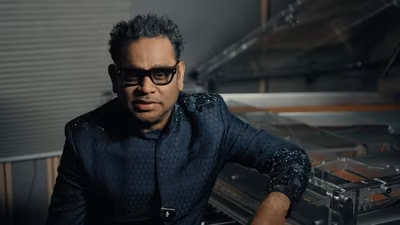
Why Trolling a Genius is the Most Tone-Deaf Move Bollywood Has Ever Normalized
There are controversies that deserve debate. Then there are controversies that expose nothing except the intellectual poverty of the people creating them.
The current backlash against AR Rahman belongs to the second category.
Because let’s be very clear: when the internet decides to question the credibility, intent, or “nationalism” of a man who has literally composed “Maa Tujhe Salaam”, we are not witnessing cultural criticism. We are witnessing a public meltdown of common sense.
This isn’t just trolling. This is insecurity weaponized—from anonymous social media mobs and from an industry that has long survived on connections more than competence.
Rahman didn’t create this drama.
He simply revealed the truth behind it.
The Absurdity of the Attack: Imagine Doubting a Double Oscar Winner
Some people on social media are behaving like they’ve uncovered a scandal.
What they’ve actually uncovered is their own ignorance.
AR Rahman is not a “rising artist.” He is not someone desperate for acceptance. He is not somebody auditioning for approval from Twitter threads.
Rahman is:
- A double Oscar winner
- A global music institution
- A composer whose work has shaped Indian identity across languages, religions, and regions
The sheer irony of questioning his intent is almost artistic in itself.
It’s like accusing sunlight of being fake.
It’s like asking a symphony to prove it understands music.
The “Gang” Reality: Rahman Exposed the Mediocrity, and Mediocrity Got Triggered
The core of this controversy started when Rahman acknowledged something most insiders already know but rarely say out loud:
He noticed he was losing work due to rumors spread by a “gang” in Bollywood.
And instead of listening, reflecting, or correcting industry rot, the system did what it always does when exposed:
It retaliated.
Because when someone as calm, accomplished, and untouchable as Rahman admits that gatekeeping exists, it becomes a mirror the industry can’t look into.
Rahman’s statement wasn’t “I’m a victim.”
It was simply, “I’m aware.”
And that awareness is terrifying to an industry where:
- politics often outruns performance
- networks often outrun talent
- marketing often outruns merit
Here’s the real point that people missed:
Rahman isn’t blocked because he’s weak. Rahman is blocked because his standards expose who is.
When you build a system around average work, the greatest threat is not competition—it’s excellence.
Communal Bias Accusations? Then Explain “Maa Tujhe Salaam” First.
The most embarrassing layer of this backlash is the communal framing.
Certain right-wing trolls tried to paint Rahman as “biased,” “anti-national,” or someone with some hidden agenda.
And honestly, that argument collapses under one brutal, undeniable fact:
AR Rahman composed “Vande Mataram (Maa Tujhe Salaam).”

This isn’t a small patriotic song.
It is one of the most iconic modern patriotic soundscapes India has ever produced—played during:
- Independence Day celebrations
- Republic Day events
- cricket matches
- public gatherings where national pride is literally amplified through speakers
So accusing the creator of “Maa Tujhe Salaam” of being “not Indian enough” is not just incorrect.
It is a masterclass in irony.
It exposes a loud truth:
Many of these trolls don’t actually love the nation.
They love the feeling of attacking someone publicly and calling it patriotism.
Because real patriotism would mean respecting those who built India’s cultural prestige globally—Rahman being among the highest.
“The Audacity of Mediocrity”: Trolls Have Noise, Rahman Has Legacy
Let’s compare the scoreboard, because reality is the ultimate fact-check.
The Troll Economy:
- achievements: outrage tweets
- credibility: none
- legacy: one algorithm cycle
- talent: recycled opinions
AR Rahman’s Economy:
- 2 Academy Awards
- 2 Grammys
- BAFTA
- Golden Globe
- collaborations on the world stage
- a catalog that will outlive today’s internet trends by decades
This backlash isn’t “criticism.”
This is what happens when:
people with no legacy try to attack someone with an immortal one.
It’s like a toddler giving performance feedback to a surgeon mid-operation.
Industry Support Proves the Only People Who Hate Rahman… Are the Ones Who Can’t Compete
The backlash became so irrational that it forced professionals to step in and shut it down.
The data clearly highlights industry voices like:
- Mithoon, emphasizing the sanctity of the creative process and Rahman’s unmatched respect
- Manoj Muntashir, who—despite being associated with nationalist sentiment—still acknowledged that Rahman’s contribution is too significant to be dishonored
And that matters.
Because it shows something powerful:
real creators recognize real creators.
Only outsiders mistake trolling for analysis.
When even those who might ideologically differ from Rahman still defend his contribution, it becomes clear:
This isn’t a “Rahman problem.”
This is an ecosystem problem.
The Economic Truth: Bollywood Needs Rahman More Than Rahman Needs Bollywood
This is the part the industry doesn’t want to admit.
Rahman is not dependent on Bollywood for survival.
Bollywood, however, is heavily dependent on Rahman for credibility—especially global credibility.
Rahman is one of the rare Indian artists whose name signals:
- world-class production quality
- musical innovation
- international respect
- artistic seriousness
And in an era where Bollywood is already struggling with:
- creative stagnation
- over-remixed music culture
- declining emotional depth in soundtracks
Rahman represents the opposite: originality.
If Rahman walks away, Bollywood doesn’t lose “a composer.”
Bollywood loses its global bridge.
Rahman will still compose for the world.
Bollywood will still be stuck recycling the past because it cannot manufacture genius on demand.
Why Supporting Rahman Matters (Even If You’re Not a Music Nerd)
Some people treat this like celebrity gossip.
It isn’t.
Because when “gang culture,” rumor campaigns, and online mobs decide who gets to create, the public doesn’t win.
The public loses.
Supporting Rahman is not about being a fan.
It’s about defending the idea that:
talent should outrank networking. art should outrank propaganda. legacy should outrank trends.
Because if you normalize the cancellation of excellence, you don’t get better content.
You get safer content.
And safe content is another word for boring.
This Backlash Is Not About Rahman — It’s About Fear of Greatness
AR Rahman calmly stated he lost work because a “gang” spread rumors.
And the internet backlash accidentally proved his point.
Because only a threatened system behaves like this when exposed.
But here’s the reality no troll can escape:
You can trend against Rahman for a week.
You cannot erase his place in history.
Rahman doesn’t need validation from Twitter.
He has already earned validation from the world.
So if you care about Indian art, Indian music, and India’s cultural respect globally, the stance is simple:
Stand with Rahman. Not because he is perfect— but because he represents excellence.
And in an age of loud mediocrity, excellence deserves protection.