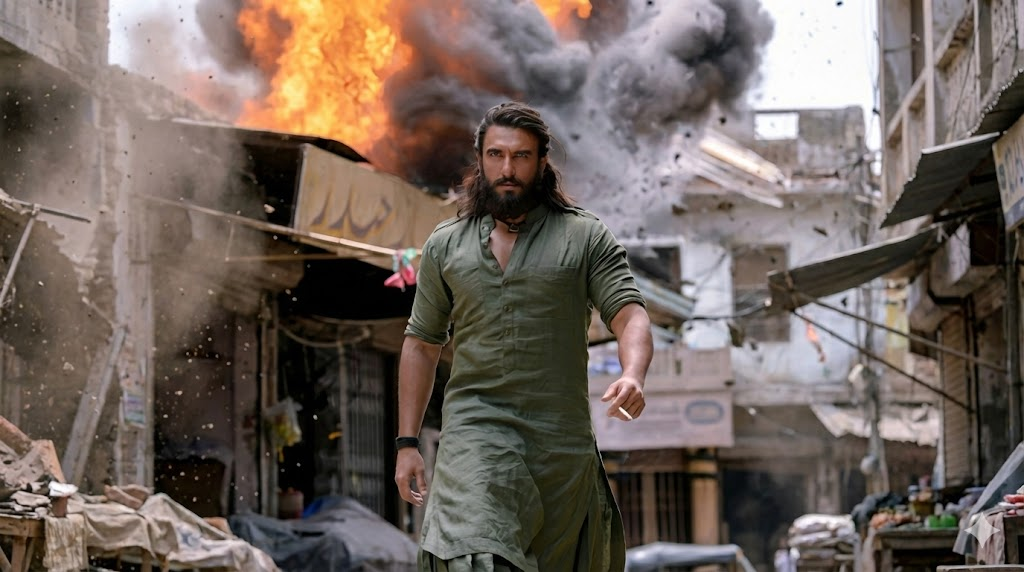
Varanasi Budget Breakdown: Pre-Release Box Office, Star Fees & Profit Analysis
When SS Rajamouli dreams, the global box office pays attention. Following the historic, Oscar-winning triumph of RRR, the visionary filmmaker has embarked on his most ambitious cinematic expedition yet. Titled Varanasi, this globetrotting action-adventure epic is not just a movie; it is an economic behemoth that is actively rewriting the rulebook of Indian cinema financing.
Starring Telugu superstar Mahesh Babu, global icon Priyanka Chopra Jonas, and Malayalam powerhouse Prithviraj Sukumaran, Varanasi is currently dominating trade conversations. As of February 2026, the film is deep into its production phase, with Mahesh Babu recently jetting off to Georgia for a massive action schedule. With over 50% of the principal photography already wrapped up, the industry’s eyes are firmly fixed on its unprecedented financial scale.
Scheduled for a worldwide theatrical release on April 7, 2027, Varanasi hasn’t even hit the screens yet, but it is already generating numbers that most blockbusters struggle to achieve in their lifetime. At CinemaVault Insights, we have cross-verified the latest data from leading trade sources to bring you the definitive intelligence report on the film’s production budget, star remuneration, pre-release business, and the colossal box office targets it needs to hit to break even.
The ₹1,300 Crore Gamble: Production Budget Breakdown
For years, the ceiling for Indian film budgets hovered around the ₹500 to ₹600 crore mark. Varanasi shatters that glass ceiling entirely. According to verified industry reports,the film is mounted on a staggering base production budget of ₹1,300 crore (approximately $150 million USD).
When you factor in the massive global print and advertising (P&A) campaigns planned for the months leading up to its 2027 release, the total investment is expected to comfortably cross the ₹1,400 to ₹1,500 crore threshold. This officially makes Varanasi the most expensive Indian film ever produced, surpassing upcoming epics like Nitesh Tiwari’s Ramayana.
Why Does It Cost So Much?
The sheer scale of Varanasi justifies its astronomical price tag. Rajamouli has conceived the narrative as a globe-trotting adventure with profound roots in Hindu mythology, traversing multiple timelines from the Treta Yuga to 2027 CE.
- Global Shooting Locations: The production has moved away from relying solely on green screens. Filming has taken place extensively across Hyderabad, the dense forests of Kenya, the landscapes of Odisha, and currently, the rugged terrains of Georgia.
- IMAX 1.43:1 Format: Varanasi holds the distinction of being the first Indian film—and the first non-English language film globally—to be shot entirely in the 1.43:1 IMAX format. The specialized camera equipment and the subsequent post-production formatting add significantly to the daily production costs.
- VFX and World-Building: Helmed by VFX supervisor V. Srinivas Mohan, the visual effects are expected to consume nearly 35-40% of the total budget. Rajamouli is known for his meticulous pre-visualization (pre-viz), which, while saving on-set time.He requires a massive upfront investment in top-tier global VFX studios.
Interestingly, while ₹1,300 crore is a record for India, it is a masterclass in budget efficiency when compared to Hollywood. As recently noted by Variety and The Times of India, Priyanka Chopra’s Amazon Prime series Citadel cost a whopping $300 million (₹2,500 crore) for just six episodes. Rajamouli is delivering a cinematic spectacle of arguably greater magnitude for exactly half that price.
Estimated Budget Breakdown Table
| PRODUCTION ELEMENT | ESTIMATED COST (IN ₹ CRORES) | PERCENTAGE OF TOTAL |
|---|---|---|
| Pre-Production & Pre-Viz | ₹80 – ₹100 Cr | 6.5% |
| Principal Photography & Production | ₹450 – ₹500 Cr | 35% |
| Visual Effects (VFX) & CGI | ₹450 – ₹500 Cr | 35% |
| Cast & Crew Upfront Fees | ₹150 – ₹200 Cr | 13.5% |
| Marketing, P&A (Projected) | ₹100 – ₹150 Cr | 10% |
| Total Estimated Budget | ₹1,300 – ₹1,500 Cr | 100% |
(Note: These figures represent the verified trade estimates as of February 2026. Final P&A costs will be locked closer to the April 2027 release.)
Star Cast Salaries: The Shift to Profit-Sharing
One of the most fascinating aspects of Varanasi’s financial architecture is how the primary stakeholders are being compensated. To keep the on-screen production values as high as possible without crippling the cash flow, the traditional upfront fee model has been heavily modified.
Mahesh Babu & SS Rajamouli’s Masterstroke
Superstar Mahesh Babu, who essays the role of Rudhra (heavily inspired by Lord Ram), usually commands a fee of ₹70 to ₹80 crore per film. However, for Varanasi, multiple trade models have been reported. According to Odisha TV, the actor signed a unique three-year exclusivity deal worth ₹150 crore, structured as ₹50 crore per year to cover his dedicated time.
Simultaneously, prominent trade portals like Koimoi report that both Mahesh Babu and SS Rajamouli have opted for a massive backend profit-sharing model. Under this agreement, they are reportedly taking minimal to zero upfront remuneration. Instead, they hold a 40% stake in the film’s overall profits. For Rajamouli, who functions as the ultimate brand of the film, this profit share could easily translate to a historic ₹300 crore payday if the film hits its global targets. This strategic move drastically reduces the immediate burden on producers KL Narayana and SS Karthikeya.
Priyanka Chopra & Prithviraj Sukumaran’s Record Fees
Marking her grand return to Indian commercial cinema, Priyanka Chopra Jonas plays the mysterious Mandakini. Given her global stardom and massive international pull, she has reportedly charged a premium fee of ₹25 to ₹30 crore. This paycheck officially makes her the highest-paid actress in Indian cinema today, surpassing the current industry benchmarks set by Deepika Padukone and Alia Bhatt.
Malayalam superstar Prithviraj Sukumaran, who plays the formidable antagonist Kumbha, is also cashing in on the film’s massive scale. Usually charging between ₹4 to ₹10 crore for Malayalam films, his pan-India appeal and crucial role in Varanasi have bumped his remuneration to an estimated ₹10 to ₹15 crore, double his usual fee.

Verified Star Remuneration Table
| ACTOR / DIRECTOR | ROLE | REPORTED REMUNERATION MODEL |
|---|---|---|
| Mahesh Babu | Rudhra | ₹150 Cr (Over 3 years) OR 40% Profit Share |
| Priyanka Chopra Jonas | Mandakini | ₹25 – ₹30 Crores (Upfront) |
| Prithviraj Sukumaran | Kumbha | ₹10 – ₹15 Crores (Upfront) |
| SS Rajamouli | Director | Backend Profit Share (Estimated up to ₹300 Cr) |
Pre-Release Business & OTT Rights: A ₹1,000 Crore Bidding War
Because Varanasi is not releasing until April 2027, there is no physical box office collection to report yet. However, the pre-release business—the money generated by selling distribution, satellite, audio, and digital rights—is already sending shockwaves through the industry.
The Historic Netflix Negotiations
The most hotly debated topic in trade circles right now is the film’s digital streaming rights. According to the Hindustan Times and Siasat, Netflix is currently in advanced negotiations to acquire the global post-theatrical streaming rights for Varanasi.
The numbers being thrown around are unprecedented. Initial reports suggested that the makers were expecting a Hollywood-level payout of ₹1,000 crore for the global digital rights. However, considering the current market corrections in the OTT space, realistic offers have reportedly settled in the ₹650 to ₹700 crore range. Even at this “conservative” estimate, it would obliterate the previous Indian record (held by films like Kalki 2898 AD and RRR, which closed deals in the ₹200-₹300 crore bracket). If finalized, this single deal would recover nearly 50% of the film’s colossal budget before a single theatrical ticket is sold.
Theatrical Rights: Nizam & Overseas Markets
On the theatrical front, negotiations are equally aggressive. Telugu Cinema reports that a fierce bidding war is underway for the lucrative Nizam distribution territory. Veteran distributor Dil Raju initially quoted a massive sum, but the producers held out for more, leading to Mythri Movie Makers stepping in with an even higher, record-breaking offer.
Internationally, the overseas rights are valued at over ₹160 crore. Thanks to the global goodwill generated by RRR, major Hollywood studios have expressed interest in handling the overseas distribution of Varanasi, ensuring it gets a wide release in North America, Europe, and Japan on par with a Marvel tentpole.
Box Office Projections & Profit/Loss Breakeven Analysis
What does a ₹1,300 crore movie need to earn to be declared a hit? The math is daunting, but if anyone can pull it off, it is SS Rajamouli.
The ₹2,000 Crore Target
To break even and begin generating profits for the producers, distributors, and the profit-sharing talent, Varanasi needs to gross a minimum of ₹2,000 crore worldwide.
While this sounds like an insurmountable peak, context is key. Rajamouli’s Baahubali 2: The Conclusion grossed over ₹1,800 crore back in 2017. RRR grossed over ₹1,300 crore in 2022. Factoring in ticket price inflation, the expansion of the overseas market for Indian films, and the combined star power of Mahesh Babu and Priyanka Chopra, the ₹2,000 crore milestone is highly feasible.
Day 1 Box Office Projections
Trade analysts at Koimoi are already predicting an earth-shattering opening day. Leveraging Mahesh Babu’s undisputed dominance in the Telugu states . Rajamouli’s pan-India and global appeal, Varanasi is projected to open to a massive ₹300 crore worldwide gross on Day 1.
To put this into perspective, Mahesh Babu’s current highest-grossing film of all time, Sarileru Neekevvaru, has a lifetime collection of ₹225 crore. Varanasi is mathematically poised to surpass Mahesh Babu’s entire career-best lifetime gross within its first 24 hours of release.
Key Factors Behind the Anticipated Success
- The ‘Rajamouli Brand’ Trust: Audiences globally trust SS Rajamouli to deliver uncompromising theatrical experiences. His 100% success rate is the primary driver behind the film’s massive pre-release valuation.
- Priyanka Chopra’s Hollywood Crossover: Casting Priyanka Chopra is a calculated masterstroke. Her presence guarantees mainstream media coverage in the West, acting as a bridge for international audiences who discovered Rajamouli through RRR.
- Cultural Resonance Meets Sci-Fi: Blending Hindu mythology (specifically elements of the Ramayana) with a globe-trotting time-travel narrative taps into the current zeitgeist of Indian cinema, which heavily rewards culturally rooted spectacles.
Conclusion: A Watershed Moment for Indian Cinema
Varanasi is not merely a film; it is a stress test for the global viability of the Indian film industry. By mounting a project on a ₹1,300 crore budget and demanding Hollywood-level OTT payouts, SS Rajamouli is forcing the global entertainment ecosystem to view Indian cinema not as a niche regional market, but as a primary player on the world stage.
As the production continues its grueling schedules in Georgia and heads toward its April 7, 2027 release date, the financial stakes will only get higher. Whether it crosses the mythical ₹2,000 crore mark or gets bogged down by its own weight remains to be seen. But one thing is certain: the business of Indian cinema will never be the same again.
Written by the Editorial Team
Sources
- Bollywood Hungama: SS Rajamouli pushes limits again; Mahesh Babu’s Varanasi gets Rs. 1300 cr. budget
- The Times of India: Priyanka Chopra’s ‘Varanasi’ budget revealed; SS Rajamouli’s epic costs HALF of ‘Citadel’ Season 1
- Hindustan Times: SS Rajamouli’s Varanasi streaming rights may go for a whopping ₹1000 crore globally
- Koimoi: Varanasi Box Office: Poised To Beat Mahesh Babu’s Highest-Grossing Film On Opening Day Alone!
- Financial Express: Varanasi cast salary: Mahesh Babu and Priyanka Chopra’s surprising paycheques revealed
- Siasat: Buzz: Rajamouli’s Varanasi earns Rs 650 crore already?
- Telugu Cinema: Exclusive: ‘Varanasi’ begins massive theatrical, OTT negotiations
- Odisha TV: Mahesh Babu ‘drops’ fee from Rs 70 Cr to Rs 50 Cr, yet bags biggest pay in SS Rajamouli’s Varanasi
- Deccan Chronicle: Mahesh Babu Heads to Georgia for Rajamouli’s ‘Varanasi’
- OTTPlay: SS Rajamouli’s remuneration for Varanasi will shock you